Time is money – especially in the kitchen
Picture a chef walking back and forth between stations during a busy shift. The fridge is on one side of the kitchen, the grill on the other, and the pass squeezed into a narrow walkway. Every extra step adds up.
If one employee loses just 20 minutes a day moving around inefficiently, that turns into dozens of hours over the course of a year. Multiply that across the whole team and suddenly you’re paying for time that produces no value.
Poorly designed workspaces, narrow corridors or illogical station layouts slow everyone down. Staff get in each other’s way, service becomes chaotic and productivity drops.
A well-planned kitchen does the opposite. It shortens distances, simplifies workflows and allows the team to move smoothly during service. That efficiency shows up directly in labour costs.
The silent killers of restaurant margins
The wrong equipment can easily block the entire kitchen workflow.
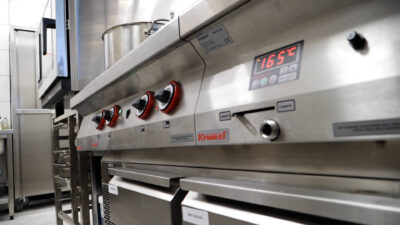
A kettle that’s too small for the volume of food being prepared. One oven trying to serve several sections of the kitchen. No high-capacity pan for large batch cooking.
The result is slower service, longer wait times and fewer tables turned during peak hours. Every bottleneck means lost revenue.
In large-scale catering kitchens, the right boiling kettle or bratt pan can significantly speed up production and increase output. In an à la carte restaurant, a high-performance combi oven can cut preparation times during the busiest hours of service.
Equipment performance isn’t just a technical detail. It’s part of the restaurant’s financial strategy.
Production mistakes and food waste
A poorly designed kitchen environment increases the risk of errors. Uneven cooking, burnt dishes or inconsistent results don’t just affect quality – they affect costs.
Every failed batch means wasted ingredients. Every complaint risks damaging the restaurant’s reputation.
Reliable equipment, precise temperature control and intuitive operation help minimise mistakes. Standardised processes are especially important in kitchens with staff turnover.
The equipment should support the team’s work, not make it harder.
Less waste means lower food cost. And lower food cost has a direct impact on profitability.
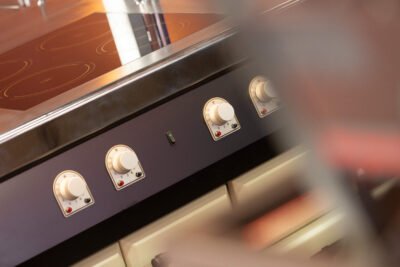
Monoblock or a traditional kitchen setup?
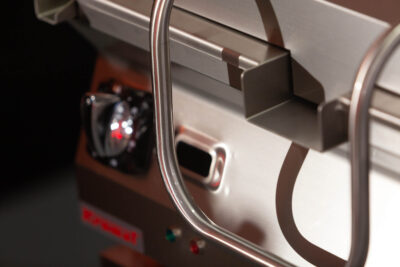
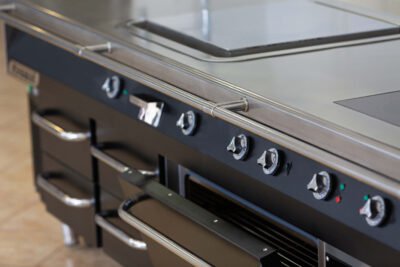
More and more modern kitchens are choosing monoblock systems – integrated cooking lines that create one continuous, seamless workspace.
Compared to traditional setups made from separate appliances, a monoblock offers:
-
shorter distances between stations
-
improved workflow and ergonomics
-
easier cleaning and higher hygiene standards
-
better use of available space
-
a clean, professional look – especially important in open kitchens
But this isn’t just about appearance.
By reducing unnecessary movement, simplifying cleaning and optimising the layout, a monoblock can save both time and operational costs. In many cases, it becomes an investment in efficiency rather than just another piece of equipment.
Kitchen design as part of business strategy
One of the most common mistakes investors make is building a kitchen piece by piece from a catalogue. Buying individual appliances without a clear overall concept rarely results in a well-functioning system.
A professional kitchen design should consider several factors:
-
the style of menu
-
daily production volume
-
the restaurant’s business model
-
team size
-
available space and utilities
-
the pace of service
A restaurant kitchen operates very differently from a school canteen or a central catering production facility. Equipment should match real operational needs – not too small, but also not unnecessarily oversized.
Planning a kitchen with a 5–10 year perspective helps avoid expensive redesigns in the future.
The kitchen is an investment, not a cost
A well-designed kitchen can:
-
reduce preparation time
-
increase production capacity
-
minimise ingredient waste
-
eliminate downtime
-
improve team ergonomics
-
stabilise operational costs
Ergonomics isn’t a trend. It’s a competitive advantage.
If you’re planning a new restaurant or upgrading your kitchen, it’s worth thinking about the kitchen not as a cost – but as a tool that generates profit.