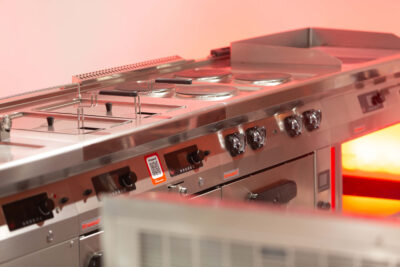
More and more investors and owners of restaurants, hotels, canteens and grab-and-go concepts are choosing well-thought-out commercial kitchen designs – not only to meet sanitary regulations, but above all to create a space that truly works. A kitchen that speeds up processes, reduces stress, improves team organisation and enhances service quality.
Because a good kitchen starts with a good design. Not a random layout, not a plan downloaded from the internet, but a solution tailored to your venue, your menu and your real operational needs.
Where to Start When Designing a Commercial Kitchen?
Before sitting down with a designer or kitchen technologist, it’s worth preparing a few key pieces of information:
-
Floor plan of the premises – room layout, available dimensions, location of doors, windows and utility connections
-
Planned menu – it determines the entire back-of-house layout; a burger concept has different needs than a hotel breakfast kitchen or a diet-catering operation
-
Number of staff and staff rotation – ergonomics and workstation count must match the scale of operations
-
Daily number of meals served – essential for selecting equipment with the right capacity
-
Available utilities – gas, three-phase power, ventilation; these factors directly affect equipment choices
Many investors try to organise the back-of-house themselves or with the help of a general interior designer. The result? A kitchen that looks good but turns out to be impractical, poorly adapted to the work rhythm or non-compliant with regulations. This often leads to costly modifications and team frustration.
That’s why it’s worth consulting an experienced kitchen technologist from the very beginning – someone who takes care not only of aesthetics, but above all of functionality and regulatory compliance.
The Most Common Mistakes in Kitchen Design
Narrow walkways and lack of a proper workflow
Staff constantly crossing paths, deliveries interfering with production, dirty dishes ending up near the serving area – sound familiar? These are classic results of poor workflow planning.
Equipment that is too small – or too large
Buying equipment without analysing kitchen load is a frequent mistake. Undersized equipment can’t keep up with demand, while oversized machines generate unnecessary costs.
Ignoring sanitary and fire safety regulations
Incorrect zoning, insufficient ventilation or inappropriate surface materials can prevent kitchen approval and force expensive changes.
Lack of ergonomics and logic
A dishwashing area far from the dishwasher, prep zones in illogical locations, worktops set too high or too low – all of this slows work, increases fatigue and reduces efficiency.
Avoiding these mistakes comes down to knowledge and experience. That’s why it’s worth entrusting kitchen design to specialists who understand the realities of everyday back-of-house operations.
Why Trust the Experts at Kromet?
Designing a commercial kitchen requires not only knowledge of technical regulations, but also real-world experience with how chefs, kitchen assistants and shift managers actually work.
At Kromet, we combine both. For over 65 years, we have been supplying professional catering equipment, and for many years we have also offered comprehensive commercial kitchen design services.
Why work with us?
-
Deep industry expertise – we work with restaurants, hotels, canteens, central kitchens and catering companies across Europe
-
A team of practitioners – designers and technologists who understand operations, not just technical drawings
-
Fast turnaround – from floor plan to full documentation in as little as 14 days
-
Full regulatory compliance – designs meet all current sanitary and building regulations
-
Flexibility – every kitchen is tailored to your menu, team and scale of operation; no templates, no compromises
That’s why our kitchens don’t just look good – they simply work.
What’s Included in a Kromet Kitchen Design?
Wondering what you actually get when you choose a Kromet kitchen design? Here’s what’s included:
-
Individual needs analysis – we get to know your concept, operations and menu
-
Functional kitchen layout – clearly defined zones (goods reception, storage, preparation, production, service, dishwashing) based on proper workflow principles
-
Equipment selection – solutions matched to your operational scale, kitchen type and available utilities
-
Technical documentation – including layouts required by sanitary authorities and for final approval
-
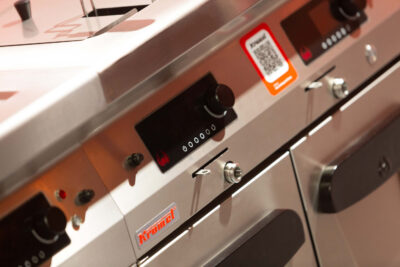
Equipment consulting – recommendations from our own product range; you can see and even test selected equipment at our Culinary Technology Center in Warsaw
This is more than just a design – it’s comprehensive support from concept to implementation.
Starting the Year With a New Venue? Start With an Advantage
The new year is the perfect moment to implement changes that will pay off for months – and years – to come. If you’re planning to open a new venue or modernise your kitchen, do it the smart way.
A well-designed kitchen is an investment that quickly delivers returns: better organisation, higher efficiency, easier hygiene management and smooth inspections.
Trust specialists who understand what everyday kitchen work really looks like – and who can help you optimise it.
Design a kitchen that truly works.